Critique cinéma en profondeur

Analyses exigeantes, contextes cachés, pour transformer chaque séance en expérience consciente et engagée.
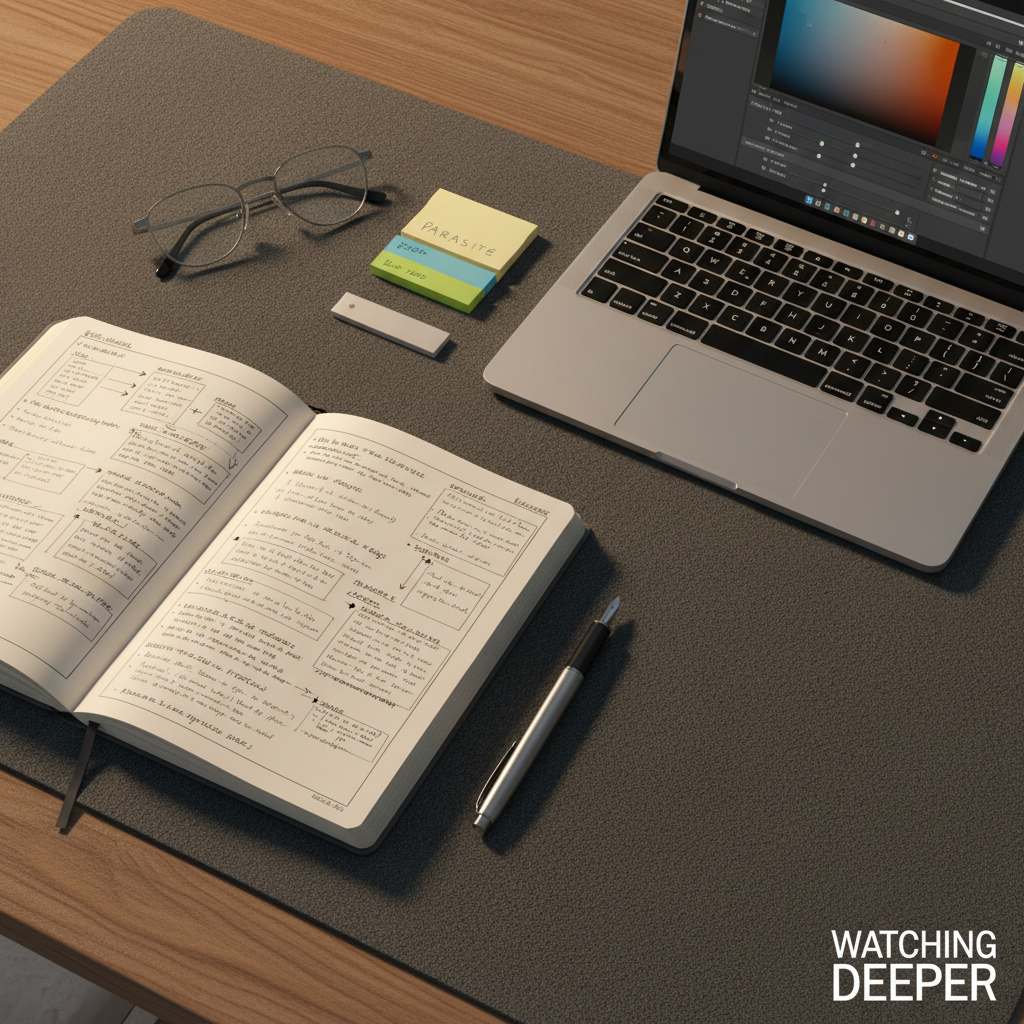
An open hardcover notebook filled with neatly handwritten film notes, boxes and arrows analyzing shots and themes, lies on a charcoal grey felt desk mat. Beside it, a fine-tip black pen, a pair of silver-rimmed reading glasses folded closed, and a small stack of color-coded sticky notes marked with film titles surround a slim laptop displaying a paused color grading interface. Overhead warm desk lighting casts clear, directional illumination, creating crisp shadows along the notebook’s spine and a soft glow on the laptop’s metallic surface. Captured from a slightly elevated three-quarter angle in photographic realism, the composition follows the rule of thirds, giving room for negative space that feels precise, calm, and rigorously professional, embodying the idea of “watching deeper.”
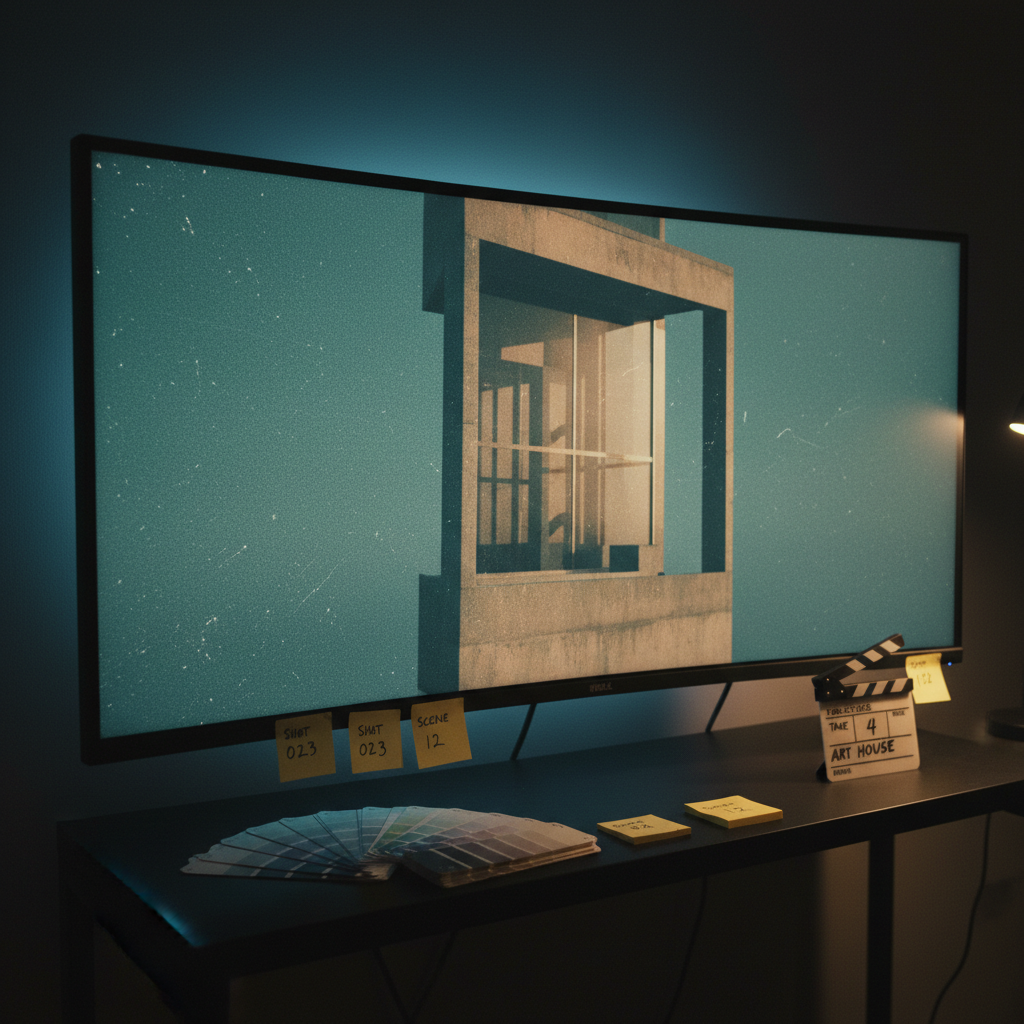
A large ultra-widescreen monitor fills the frame, displaying a frozen mid-shot from an art-house film: muted teal and amber tones, heavy grain, and meticulously composed architecture without showing any characters. Around the monitor’s slim black bezel, color swatch cards, small sticky notes with shot numbers, and a miniature clapperboard rest on a matte black shelf. Subtle LED backlighting in cool blue gently halos the screen against a dark charcoal wall. The room is otherwise dim, with only the monitor’s glow and a faint desk lamp off-frame creating a cinematic, low-key ambiance. Shot from a slightly low angle with sharp focus throughout, the scene feels like a professional colorist’s station, emphasizing critical observation and detailed cinematic analysis in clean, photographic realism.

Regarder les films autrement

Frame District décortique les images, les récits et les gestes pour révéler ce que le cinéma tait. Une voix critique, curieuse, indépendante. Découvrez notre manifeste complet sur la page À propos.